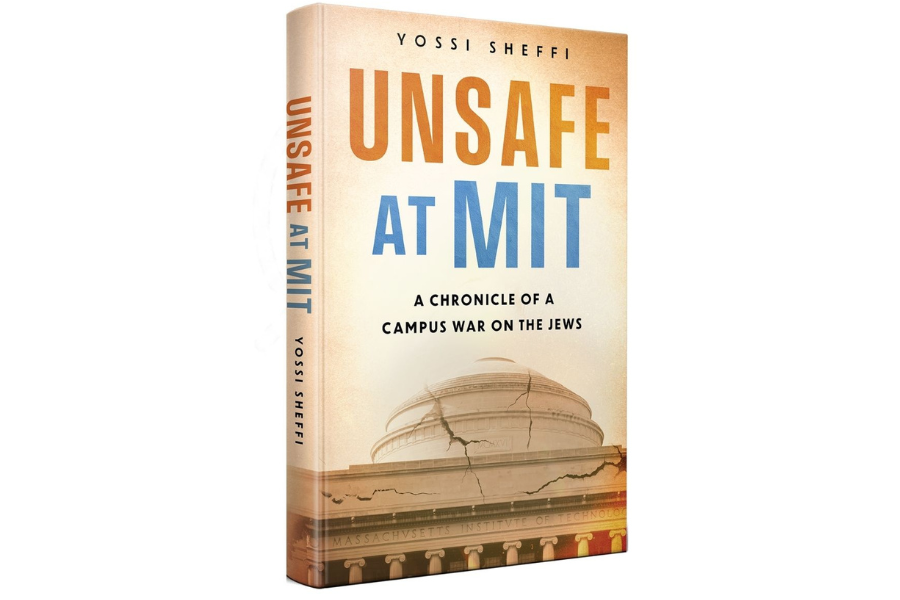
Unsafe at MIT: A Chronicle of a Campus War on the Jews
For Jewish and Israeli students at MIT, the days and months following October 7 profoundly changed campus life. Campus corridors, which once reverberated with the voices of researchers discussing problems and sharing solutions, became an echo chamber of hostility and intimidation. For many students, the experience reshaped not only their education but also their sense of belonging at one of the world's leading universities.
Based on dozens of interviews and drawing on administration correspondence, social media posts, and television footage, this book tells the story of that transformation through the voices of those who lived it. Some of these events made national headlines, while others unfolded quietly in classrooms, residence halls, and student spaces. Together, they reveal how a global conflict reverberated through a campus community.
This oral history chronicles the multiple fronts that Jewish and Israeli students faced, including the fight for the truth, the fight against delegitimization, the fight against the Boycott, Divestment, and Sanctions (BDS) campaign, and the fight against the erosion of law and order on campus. Their stories illuminate a broader institutional failure: the erosion of MIT's commitment to prioritizing innovation above dogma and the consequences that follow when a university abandons the standards that define it. Offering a firsthand account of a pivotal chapter in MIT's history, the book also explores the responsibilities institutions bear when the conditions necessary for learning, inquiry, and intellectual freedom are undermined.
Endorsements:
“This book serves as a historical record in the unfolding chapters of contemporary Jewish history. The explosion of antisemitism that swept across MIT in the aftermath of October 7th is a microcosm of the anti-Jewish animus that flooded campuses, media institutions, and city streets following the deadliest massacre of Jews since the Holocaust. This work sheds light on the failure of institutional leadership to protect their Jewish communities, while students, faculty, and community leaders had no choice but to step forward and meet the moment with courage and resilience. Their story is chronicled in these pages and should serve as a lasting lesson for the next generation of Jewish leaders.”
— Dr. Yechiel Leiter, Israeli ambassador to the United States
“Deeply personal, rigorously documented, and at times enraging—Sheffi’s account of Jewish and Israeli life at MIT after October 7 is both a witness testimony and a case study in institutional failure. That he also points toward constructive responses makes it more than a lament.”
— Jason Furman, Aetna Professor of the Practice of Economic Policy, Harvard University and Former Chair of the Council of Economic Advisers in the Obama Administration
“It is essential for insiders to document the academic antisemitism they have experienced or observed. Professor Sheffi’s book is a tour-de-force through the experiences of dozens of MIT students and staff.”
— Alan Dershowitz, Felix Frankfurter Professor of Law, Emeritus, Harvard Law School
“In the service of any future study of jihad in America, Professor Sheffi has compiled an invaluable record of the thuggish assault on MIT, one of the twin academic towers of Cambridge, MA. As demonstrated in the book, the attacks after October 7, 2023, destroyed the elements of a ‘respectful, welcoming, and productive community’ necessary for scientific inquiry. If they survive intact, the school and the country will be greatly in his debt.”
— Ruth Wisse, Emerita, Harvard University and Senior Fellow of Tikvah


